
 020 3551 1493


- Drug and Alcohol
Court approved hair, nail, blood drug and alcohol testing - Maternity and Paternity
Ministry of Justice approved legal DNA testing - Wider Relationships
Understanding second and third degree familial connections - Immigration
Home Office approved testing for visas and passports - Expert Services
Court standard expert witness reporting - International DNA Collection
Home Office approved DNA collection from overseas

 30/03/2026
The Chocolate Principle
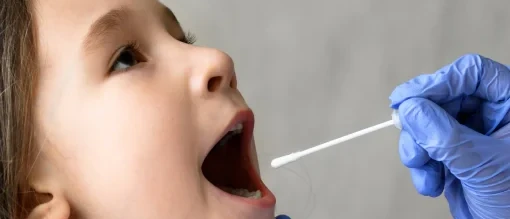
Picture this: someone has taken a bite out of a chocolate bar and left it on the desk. Trivial, yes, but forensically speaking, that bite mark contains DNA. Cells from the mouth of whoever took it are left behind on the surface. Swab that area, extract a profile, compare it to a suspect, and you have your answer.
This is the foundational principle of forensic DNA science: every contact leaves a trace. And while catching a chocolate thief is far from our core business at AttoLife, the same science, scaled up in power and precision, is what we apply to some of the most consequential legal cases that come through our laboratory.
The Challenge: What Happens When the Key Person Is Gone?
For straightforward cases, paternity, maternity, full siblings, DNA testing is well-established and relatively simple. The relationships are close, the shared DNA is substantial, and results are typically conclusive with standard testing.
But legal cases are rarely straightforward.
Consider an immigration matter where a mother cannot be located, and the only available relative is her half-sibling. Or a probate dispute where the deceased has no surviving children, and a distant relative is seeking to establish their claim to an estate. In both cases, the people you would most want to test simply aren't available, and the relationship you're trying to prove is several steps removed.
This is where DNA testing becomes considerably more complex, and where the number of markers tested becomes critical.
What Is a DNA Marker?
When we test DNA, we don't analyse the entire genome, that would be impractical. Instead, we look at specific, carefully chosen sections of DNA called markers. These are positions in the genome where variation between individuals is high, making them useful for distinguishing one person from another, or identifying whether two people share a biological relationship.
There are two main types of markers we use:
STRs (Short Tandem Repeats) are the gold standard for direct relationship testing. They are highly variable between individuals and have been used in forensic science for decades. Standard testing panels use 23 or 50 STR markers, which is more than sufficient to confirm paternity, maternity, or full sibling relationships.
SNPs (Single Nucleotide Polymorphisms) are individual variations at a single point in the DNA sequence. Any one SNP is less informative than an STR, but there are hundreds of thousands of them available. Testing large numbers of SNPs, up to 600 markers, allows us to detect and confirm much more distant biological relationships.
Why Distance Matters: The Marker Problem
Every time DNA is passed from parent to child, only half of it is inherited. That means the further apart two relatives are, the smaller the proportion of DNA they share:
- Parent and child share approximately 50%
- Grandparent and grandchild share approximately 25%
- Uncle/aunt and niece/nephew share approximately 25%
- Half-uncle/aunt and half-niece/nephew share approximately 12.5%
- First cousins share approximately 12.5%
With close relationships, even a small panel of markers gives you a strong, reportable result. But as the relationships become more distant, the shared DNA decreases, and the gap between "related" and "unrelated" becomes much narrower. With a standard panel of 23 or 50 markers, the analysis may fall into an inconclusive zone: technically pointing in one direction, but not strongly enough to report with confidence.
Adding more markers solves this. With 600 SNP markers, we have enough data points to detect even modest levels of shared DNA reliably, producing results that are definitive and fully reportable, even for third-degree cousin relationships.
What This Means in Practice: Inheritance Disputes
One area where extended relationship testing is increasingly relevant is probate and inheritance law. AttoLife regularly receives instructions in cases involving estates where the direct line of inheritance has been broken, where a person has died without a surviving spouse or children, and more distant relatives are seeking to establish their claim.
In these situations, the individuals being tested may be half-siblings, half-uncles, great-aunts, or first cousins of the deceased. Standard testing is often inconclusive at these distances. And when the sums involved are significant, the parties and the court need more than a weak or indeterminate result. They need a definitive answer.
This is precisely the scenario where 600-marker SNP testing comes into its own. It allows us to take cases that would otherwise be reported as inconclusive and produce a clear, reportable result: either confirming or excluding the claimed biological relationship with a high degree of scientific confidence.
Crucially, upgrading to SNP testing does not require new samples to be collected. If swabs have already been taken for standard STR testing, those same samples can be used for the extended SNP analysis. The only thing that changes is the depth of the laboratory analysis.
How We Express Results
DNA results are not reported as a simple yes or no. We use a likelihood ratio, a number that expresses how much more likely the results are if the two individuals are related, compared to if they are unrelated. We then translate this into a verbal equivalent, following the standard published by the European Network of Forensic Science Institutes (ENFSI), used by reputable forensic laboratories across the world:
Weak support -> Moderate -> Moderately strong -> Strong -> Very strong -> Extremely strong (above one million)
For a result to be reportable, we need to reach at least the level of strong support. With standard marker panels, distant relationships often produce only weak support, insufficient to base any legal decision on. With 600 markers, we consistently achieve very strong or extremely strong support even for third-degree relationships.
Frequently Asked Questions
What types of legal cases benefit most from extended DNA relationship testing?
Extended testing is particularly valuable in immigration matters where key family members are unavailable, family law cases where establishing links requires testing more distant relatives, and probate disputes where a claimant's biological relationship to the deceased needs to be confirmed or excluded.
What is the difference between STR testing and SNP testing?
STR testing uses 23 or 50 markers and is the standard approach for close relationships such as paternity, maternity, and siblings. SNP testing uses up to 600 markers and is required when the biological relationship is more distant, for example half-uncles, first cousins, or great-aunts and nieces.
How accurate is DNA relationship testing?
DNA relationship testing is highly accurate, but accuracy depends on two things: the relationship being tested and the number of markers used. For close relationships like paternity, standard testing produces an extremely strong result in virtually every case. For more distant relationships, accuracy improves significantly with more markers. With 600-marker SNP testing, AttoLife is able to produce a definitive, reportable result even for third-degree relationships such as first cousins, where standard testing would often be inconclusive.
Can extended testing be done on samples already collected?
Yes. Upgrading from standard STR testing to 600-marker SNP testing can be done using the swabs already collected. There is no need to arrange new sample collection appointments.
What does an inconclusive result mean?
An inconclusive result means the laboratory has not been able to produce a likelihood ratio strong enough to report. This typically happens when the relationship being tested is distant and the standard marker panel does not generate enough data. In many of these cases, upgrading to 600-marker SNP testing resolves the issue.
How long does extended SNP testing take?
Standard STR testing can be completed within 24 hours of samples arriving at the laboratory. SNP testing using 600 markers is a more complex process and typically takes over a week. We will always advise on timelines when you instruct us.
Is AttoLife's testing accepted by UK courts and the Home Office?
Yes. AttoLife is a UKAS ISO 17025 accredited laboratory approved by the Ministry of Justice. Our reports are produced to court and Home Office standard and include expert witness statements where required.
Can you test for a relationship without involving the deceased directly?
Yes. If the key individual is deceased and no stored sample is available, we can test living relatives to establish a biological link. The exact approach depends on which relatives are available and how distant the relationship is, and our team will advise on the best route for your case.
What is a likelihood ratio?
A likelihood ratio expresses how strongly the DNA results support or contradict the claimed relationship. A higher number means stronger support. We express this as a verbal equivalent following the international standard used by forensic laboratories across Europe.
Simon Knights is Senior Forensic Scientist and DNA Team Leader at AttoLife, with over 10 years reporting DNA cases for the legal sector following a career as a Home Office Forensic Scientist.
To discuss a case or request a quote: [email protected] | 020 3551 1493